Hazardous Locations Require Certified Surge Protection
UL Standards outline the unique equipment safety requirements for hazardous locations, but what makes this specification so significant?
Briefly, a hazardous area is one that may contain flammable or explosive matter—such as gasses, dusts or vapors. In these locations, combustion, fire, or explosions are possible given the right conditions of fuel and an ignition source.
Specifications further divide hazardous areas into class one and class two levels, based on the type of flammables and amount of potential fuel (i.e., short time of exposure versus permanent exposure). Applications ranging from oil and gas to industrial settings all have the potential for hazardous location designation.
The significance of this specific designation comes down to one word: safety. Standards such as UL 497B help to ensure safe equipment performance in hazardous locations due to enhanced testing and design that minimizes the potential for ignition.
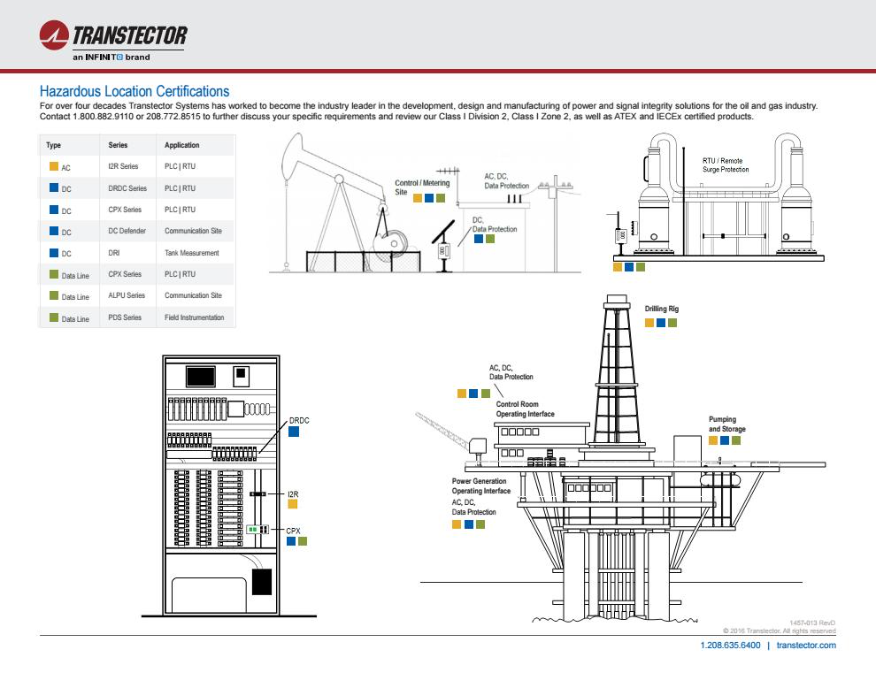
As in most applications, surge protection plays a crucial role. Transtector Systems and PolyPhaser provide a broad range of surge protection solutions with UL certification for hazardous locations. AC, DC and data (gigabit Ethernet/PoE) SPDs protect mission-critical equipment and meet this crucial safety requirement.
Learn More